Discovering the Soul of Jamaican Food Through Its Signature Dishes
Jamaican food has a way of announcing itself before it reaches the table. You smell pimento smoke before you see the grill. You catch the warm sweetness of coconut milk and thyme drifting from a pot before the lid comes off. Even the sharper notes, Scotch bonnet, allspice, escovitch vinegar, feel generous rather than restrained. This is a cuisine that does not whisper. It carries memory, migration, hardship, celebration, and invention in equal measure.
What makes Jamaican cooking so compelling is not only flavor, though flavor is certainly the hook. It is the way each dish reflects the island’s history and rhythm of life. Indigenous techniques, African foodways, British colonial habits, Indian spices, Chinese influences, and local adaptation all meet in a kitchen that values bold seasoning and practical skill. The result is a culinary tradition built as much on resilience as pleasure.
Anyone trying to understand Jamaica through food quickly realizes that no single plate can stand in for the whole. Jerk is famous for good reason, but it is only one part of a much larger story. Patties matter. So does ackee and saltfish. So does curry goat on a Sunday, a bowl of pepper pot soup, and rice and peas that tastes simple until you notice how many choices shaped it. Jamaican food rewards attention. The more closely you look, the more character it reveals.
More than heat, more than hype
Outside the Caribbean, Jamaican food is often reduced to a few easy stereotypes: spicy, grilled, colorful, maybe a little rough around the edges. That reading misses the depth of the cuisine. Heat is part of the picture, but balance matters more. Scotch bonnet peppers can be fiery, yet skilled cooks use them with judgment. Sometimes the pepper is chopped and fully integrated. Sometimes it is left whole in a pot so it perfumes the dish without overwhelming it. That distinction alone tells you a lot about Jamaican cooking. Power is there, but control matters.
Texture matters too. So does smoke. So does acidity. A plate of escovitch fish is not just about fried snapper, it is about the bright sting of pickled vegetables against crisp skin. A good bowl of mannish water is not just rustic soup, it is depth built from bone, herbs, and patience. Even a roadside roast yam with saltfish or a piece of hard dough bread with cheese can reveal the Jamaican instinct for contrast: dry and moist, rich and sharp, soft and crisp.
The best Jamaican cooks I have known rarely talk in abstract culinary language. They talk about whether the scallion was fresh enough, whether the pimento wood caught properly, whether the dumpling held its shape, whether the gravy had body. Their standards are exacting. Many of the signature dishes look informal, but they depend on serious technical understanding. Timing a pot so that the starch finishes properly while the meat stays tender is not casual work. Seasoning layers so that garlic, thyme, onion, ginger, black pepper, and Scotch bonnet all show up without crowding each other takes experience.
Jerk, the dish that carries a whole tradition
If one dish has become the international shorthand for Jamaican food, it is jerk. Unfortunately, global popularity has flattened its meaning. Too often, jerk is treated like a generic spicy sauce. In Jamaica, it is a method, a seasoning philosophy, and a cooking tradition with roots often linked to the Maroons, whose techniques for preserving and flavoring meat evolved under conditions where stealth, resourcefulness, and local ingredients mattered.
Real jerk begins with seasoning, but not just any seasoning. Allspice, known locally as pimento, is central. So are Scotch bonnet peppers, thyme, scallion, ginger, garlic, and salt. Depending on the cook, you may also find cinnamon, nutmeg, clove, soy sauce, brown sugar, or vinegar. The point is not a fixed recipe. The point is a deep, aromatic paste that penetrates the meat and develops complexity over fire.
The fire itself matters. Traditional jerk cooking over pimento wood creates a fragrance that is impossible to fake completely. Charcoal can do a respectable job, and many cooks outside Jamaica have adapted with what they can get, but pimento smoke gives jerk its haunting sweetness. Pork is the classic choice for many purists, especially shoulder or cuts with enough fat to baste themselves during a long cook. Chicken is now widely popular and more common in everyday settings, partly because it cooks faster and costs less. The difference is not trivial. Pork jerk develops a richer, almost sticky depth, while jerk chicken leans brighter and can dry out if the cook is careless.
This is where judgment enters. A good jerk stand knows how to cut meat so edges char without turning the inside stringy. It knows when to wrap and when to expose, when to let smoke build and when to vent heat. It knows that the seasoning must be assertive, because some of it will dissipate over fire. Served with festival, roasted breadfruit, bammy, or simple white bread to catch the juices, jerk can feel like both feast food and everyday sustenance.
Ackee and saltfish, a national dish built on contrast
Few dishes explain Jamaica’s culinary identity as clearly as ackee and saltfish. It is beloved, debated, and immediately recognizable. It is also a dish that makes little sense until you taste it. Ackee, when cooked properly, has a soft, delicate texture that many compare to scrambled eggs, though its flavor is milder and more buttery. Saltfish, usually salted cod that has been soaked and boiled to remove excess salt, brings firmness and a savory marine note. Together, they create a combination that is at once gentle and vivid.
The supporting cast matters. Onion, tomato, scallion, thyme, black pepper, and Scotch bonnet build the aromatic base. Some cooks add sweet pepper for color and sweetness. Others keep it sparse and let the ackee do the talking. The best versions do not over-stir. Ackee is fragile and can turn mushy if handled roughly. When well made, the dish sits somewhere between a sauté and a soft scramble, with each piece still distinct.
Its story says a lot about Jamaican food. Ackee is not indigenous to Jamaica. It came from West Africa, likely during the era of the transatlantic slave trade, and over time became inseparable from Jamaican identity. Salt cod arrived through colonial trade networks. What looks like a deeply local breakfast is also evidence of forced migration, adaptation, and cultural synthesis. That is true of much https://daltontehy221.hexaforgey.com/posts/traditional-jamaican-food-meals-that-warm-the-soul Jamaican cuisine. The island’s signature dishes are often products of painful histories transformed by everyday creativity.
Ackee and saltfish is often eaten at breakfast, but calling it breakfast in the narrow sense can mislead outsiders. In Jamaica, breakfast can be substantial. It may include fried dumplings, boiled green bananas, yams, or breadfruit. These starches are not side notes. They complete the meal and turn a flavorful sauté into something grounding. On a practical level, they also reflect a food culture shaped by labor. Many traditional breakfasts were designed to sustain people through physically demanding mornings.
Patties, the portable heart of the island
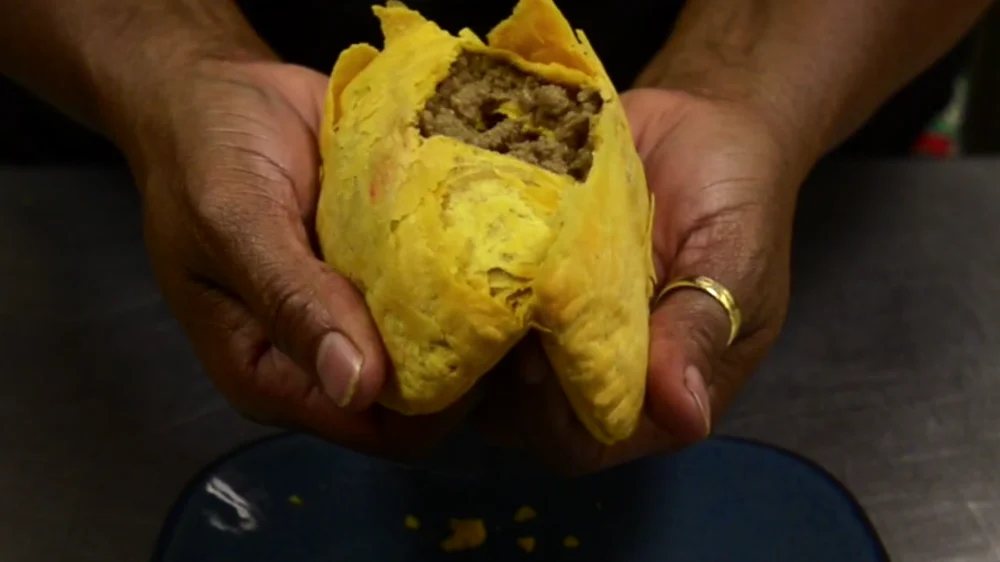
No discussion of Jamaican food is complete without patties. They are so common that visitors sometimes underestimate them, filing them mentally under snack food and moving on. That is a mistake. A good patty says an enormous amount about local taste, class, convenience, and craft.
At its best, a Jamaican patty has a crust that is flaky but not dry, sturdy enough to hold its filling yet tender enough to shatter slightly at the first bite. The yellow color usually comes from turmeric or curry powder in the dough. Inside, the filling should be moist and strongly seasoned. Beef is classic, but chicken, vegetable, shrimp, and ackee versions all have their place. The filling often carries thyme, scallion, black pepper, Scotch bonnet, and a touch of gravy so it does not eat like dry mince in pastry.
The patty’s practical appeal is obvious. It is affordable, portable, and filling. Schoolchildren eat them. Office workers grab them on a quick break. Travelers take them on the road. There is also the famous pairing with coco bread, where the hot patty is tucked into a soft, slightly sweet bread roll. It is a combination that makes immediate sense once you try it. The pastry brings spice and fat, the bread brings softness and relief.
What makes patties interesting from a food perspective is the tension between consistency and individuality. Large bakeries and chain shops have standardized the format, which has benefits. You know roughly what you are getting, and quality can be quite good. But smaller bakeries still distinguish themselves through crust texture, filling moisture, and seasoning choices. Some lean peppery, others richer and more onion-forward. That range keeps the category alive.
Rice and peas, the quiet benchmark
Visitors often lavish attention on meats while overlooking rice and peas. Seasoned Jamaicans do not make that mistake. Rice and peas is a benchmark dish. If it is bland, greasy, undercooked, or mushy, the meal suffers no matter how good the chicken or fish may be.
Despite the name, the “peas” are usually kidney beans or gungo peas, depending on region, season, and occasion. The beans are simmered with coconut milk, thyme, scallion, onion, garlic, and often a whole Scotch bonnet. Then the rice is cooked in that seasoned liquid until it absorbs the flavor and aroma. Good rice and peas should be separate rather than clumped, creamy from coconut without being heavy, and fragrant enough to hold its own against richly seasoned mains.
This dish demonstrates a principle that appears across Jamaican food: so-called simple things are not simple in execution. Coconut milk can scorch. Too much liquid turns the rice soft. Too little seasoning leaves it flat. A whole Scotch bonnet adds perfume, but if it bursts unexpectedly, the heat level changes dramatically. Every home cook who has made enough pots has had one come out wrong. That is part of the education.
Rice and peas also has ceremonial weight, particularly on Sundays and holidays. In many households, Sunday dinner is not casual. It is a structured meal with social meaning, often featuring rice and peas alongside chicken, curry goat, oxtail, or fish. The dish carries comfort, routine, and family expectation.
Curry goat and the art of layered spice
Curry goat holds a special place in Jamaican cooking, especially at gatherings where people expect the food to feel generous. Weddings, funerals, birthdays, Sunday dinners, community events, curry goat belongs in many of them because it satisfies in a way that lighter dishes cannot.
Jamaican curry differs from Indian curry even though it draws from Indian influence. Indentured laborers from India brought spice traditions that Jamaicans adapted to local taste and ingredients. Jamaican curry powder often leans heavily on turmeric, coriander, cumin, fenugreek, and allspice, producing a warm, earthy profile. In the pot, that spice blend meets thyme, scallion, onion, garlic, ginger, and Scotch bonnet. Browning can be used. Potatoes may be added, though this is one of those details that can start a spirited argument depending on who is cooking and who is eating.
Goat requires patience. It can be tough if rushed and deeply satisfying if given enough time. The best curry goat is tender but not collapsed, with sauce that clings rather than runs thin. There should be enough fat and gelatin to give the curry body, yet not so much that it feels greasy. This is where practical experience matters. Goat varies. Older animals need more time. Bone-in cuts bring flavor but complicate portioning. The cook must know whether to build heat early or finish with fresh pepper toward the end.
Served with white rice or rice and peas, curry goat shows how Jamaican food handles richness. It does not apologize for intensity. It manages it through spice, starch, and contrast.
Escovitch fish and the brightness of the sea
For a cuisine famous for grilled meats and slow braises, Jamaican food can also be strikingly sharp and bright. Escovitch fish is a prime example. Usually made with fried whole fish, often snapper, it is topped with a hot pickled dressing of carrots, onions, Scotch bonnet, and sometimes bell peppers in vinegar. The fish comes crisp and savory. The topping cuts through with acidity and crunch.
The likely roots of escovitch stretch through Spanish and broader colonial influence, but the Jamaican version has become entirely its own. It fits the island’s taste for punchy seasoning and textural contrast. It also shows the relationship between inland and coastal eating. Fresh fish is central in many communities, but preparation varies depending on what is available and how quickly it must be served.
A well-fried fish is harder to achieve than many restaurant menus imply. The skin needs to crisp without sticking. The flesh needs to cook through without turning dry. The escovitch dressing should still have bite in the vegetables rather than tasting like limp salad in vinegar. Timing is everything. If the topping sits too long, the fish loses its crispness. If it is added too late and too cold, the marriage feels incomplete. Great escovitch lands in that narrow zone where hot fish and sharp dressing meet at the right moment.
Soups, ground provisions, and the deeper grammar of the cuisine
To understand the soul of Jamaican food, you have to look beyond the internationally famous dishes and spend time with the soups, porridges, and provisions that shape daily life. These are not glamorous on Instagram, but they are foundational.
“Ground provisions” refers to starchy staples such as yam, cassava, sweet potato, coco, and green banana. They appear in soups, breakfasts, and side dishes because they are sustaining, adaptable, and deeply tied to the island’s agricultural life. A bowl of red peas soup with dumplings, yam, and salted meat can eat like a full meal. Pumpkin soup, chicken foot soup, and mannish water all have their devotees. Each carries its own reputation, sometimes nutritional, sometimes celebratory, sometimes medicinal in the loose, household sense.
These dishes reveal how Jamaican cooking builds body. Thickening may come from starches breaking down into broth rather than flour or cream. Dumplings add heft. Coconut milk may appear, but not always. Herbs do quiet work in the background. Pepper can warm the bowl without turning it aggressive. This is a cuisine that understands how to feed large families economically without sacrificing flavor or dignity.
Porridge deserves mention as well. Cornmeal porridge, peanut porridge, plantain porridge, these are serious foods, not afterthoughts. Often enriched with spices such as cinnamon and nutmeg, and sometimes sweetened with condensed milk, they sit at the intersection of comfort and necessity. They also reflect the island’s preference for breakfasts that actually sustain people.
The seasoning hand that defines Jamaican cooking
When people try to recreate Jamaican food elsewhere and fail, the problem is often not the recipe. It is the seasoning hand. Jamaican cooking depends on knowing how much of each aromatic to use, when to add it, and how long to let it develop. Measurements help, but instinct matters.
Green seasoning is a good example. There is no single formula, yet many cooks maintain a blended mixture of scallion, thyme, onion, garlic, ginger, and pepper, sometimes with parsley or celery, to season meats in advance. It is practical and it builds continuity across dishes. But the ratio changes depending on what the seasoning is meant to do. Fish needs a lighter touch than goat. Liver can handle assertive aromatics. Chicken benefits from penetration but can turn salty quickly if seasoned carelessly and left too long.
Browning sauce is another misunderstood tool. Used well, it adds color and a faint bittersweet depth to stews and gravies. Used heavily, it can turn food harsh. Likewise, all-purpose seasoning blends are common in modern kitchens, but skilled cooks know when to rely on them and when to build from scratch. Convenience has its place. So does restraint.
Scotch bonnet might be the strongest symbol of that seasoning hand. It is famous for heat, yet experienced cooks use it for fragrance as much as fire. A whole pepper simmered in a pot can perfume an entire dish. A minced pepper in a marinade changes the personality completely. There is no single correct approach. There is only the right one for that pot, that crowd, and that moment.
Street food, cookshops, and the social life of the plate
Jamaican food is not only about recipes. It is also about where and how the food is eaten. Street vendors, roadside jerk pans, small cookshops, market stalls, and family kitchens all shape the experience. A plate bought from a pan chicken stand late in the evening tastes different from a formal restaurant version, even if the ingredients overlap. Smoke in the air, music nearby, foil containers warming your hands, those details are part of the meal.
Cookshops deserve special respect. They often serve the dishes that tourists read about but do not always know how to find at their best. Stew peas on one day, brown stew chicken on another, callaloo, fried sprat, liver, soup, oxtail when available. Menus shift with supply, labor, and local demand. That flexibility is part of the culture. A cookshop is not trying to perform abundance for outsiders. It is trying to feed a community well and make the economics work.
That practical side matters. Jamaican food can be labor-intensive. Cleaning fish, soaking saltfish, grating coconut, tending charcoal, trimming callaloo, simmering goat until tender, none of this is effortless. Even dishes that look humble may require hours of preparation. Understanding the cuisine means respecting that labor as much as the finished plate.
Why these dishes endure
Signature dishes endure because they do more than taste good. They fit the realities and aspirations of the people who make them. Patties travel well and feed people cheaply. Rice and peas stretches to feed a table. Ackee and saltfish turns traded and transplanted ingredients into something unmistakably Jamaican. Jerk transforms tough cuts and open fire into celebration. Curry goat marks occasions when the meal should feel special. Escovitch fish captures the island’s coastal sharpness.
That is the soul of Jamaican food. It is not one flavor or one iconic plate. It is the confidence to season boldly, the intelligence to balance richness with brightness, and the discipline to turn available ingredients into food with character. It is also the emotional charge carried by dishes that people associate with childhood, church, holidays, roadside stops, beach days, market mornings, and family arguments over who makes it best.
Spend enough time with Jamaican food and you start to notice that its signature dishes are all doing double duty. They satisfy hunger, certainly, but they also preserve history. Not in a museum sense, frozen and untouchable, but in the living, everyday sense. They keep stories moving. They carry memory forward in smoke, spice, starch, and broth. And they remind anyone paying attention that a cuisine becomes great not because it is fashionable, but because it remains deeply connected to the lives of the people who cook it.
Reggae Pot Jamaican Grill
2243 S Monaco St Pkwy #104
Denver, CO 80222
+1 720-410-2956
FAQ About jamaican food
What is the best Jamaican food to try in Denver?
The best choice depends on your tastes. Popular options include jerk chicken, curry goat, slow-cooked oxtail, and savory patties. Reggae Pot lists these dishes on its menu, with sides such as rice and peas and plantains. Ask the Denver team about current availability and spice levels.
Is Jamaican food very spicy in Denver?
Heat varies by dish and preparation. Jerk seasoning often includes scotch bonnet peppers alongside herbs and allspice, while other dishes may have gentler seasoning. Ask about the heat of the specific dish and any sauce before ordering.
What are some popular Jamaican snacks?
Jamaican patties are a popular snack made with flaky pastry and savory meat or vegetable fillings. Other options include fried dumplings and festival, a sweet fried dough often served with savory dishes. Availability varies, so check the current menu when ordering.